
Your Cart is Empty
FREE STANDARD U.S. SHIPPING ON LUMIPET ORDERS OVER $15.99
FREE STANDARD U.S. SHIPPING ON LUMIPET ORDERS OVER $15.99


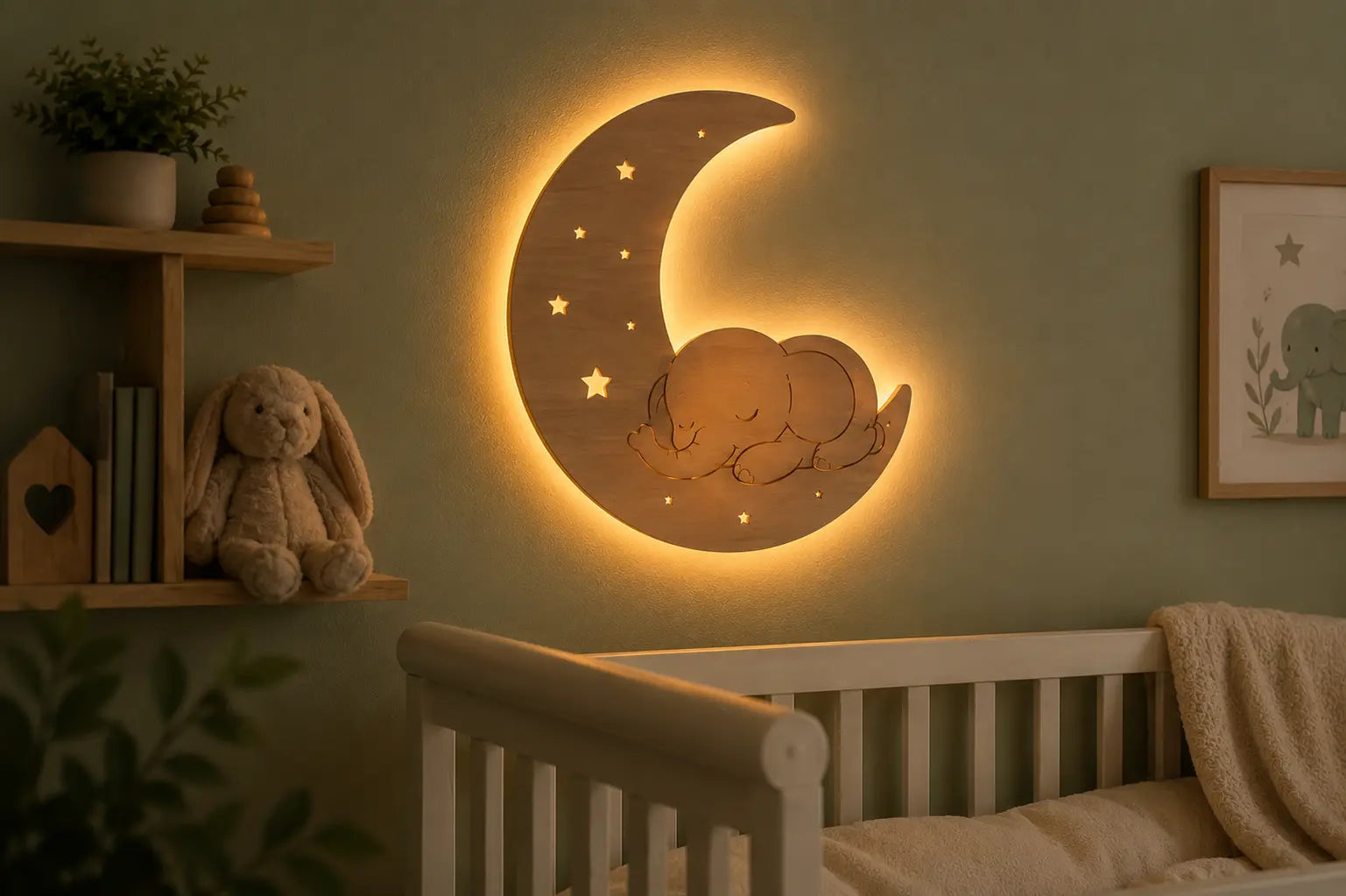
Setting up a nursery means making a lot of decisions quickly. The cot, the changing table, the colour of the walls. But one decision that parents often leave until last, or get wrong entirely, is the nursery wall light.
The right nursery wall light does more than help you see in the dark. It supports your baby's sleep, makes night feeds easier, and becomes one of the most-used items in the entire room from day one. This guide covers everything you need to know before you buy.
Whether you are setting up a nursery for a newborn, updating an existing baby room, or just trying to understand what all the fuss is about with red light and sleep, you are in the right place. If you want a broader look at lighting across all ages, read our guide to the best kids bedroom wall lights on the LumieWorld blog.
Most nurseries have a ceiling light. Some have a lamp on the dresser. But a dedicated wall-mounted nursery night light is different from both, and it is better suited to what a nursery actually needs.
A wall light sits at a low, fixed height. It throws soft, diffused light across the room without pointing directly into your baby's eyes. It is out of reach of curious hands as your baby grows. And because it stays in the same position every single night, it becomes a familiar part of the environment your baby associates with sleep.
This consistency matters more than most parents expect. Babies thrive on routine and familiarity. A warm glow in the same corner of the room, night after night, becomes a sleep signal. Before long, your baby starts recognising that light as the cue that rest is coming.
For night feeds and nappy changes, a wall-mounted nursery light is also the most practical choice. You do not want to fumble for a lamp switch at 3am. You do not want harsh overhead light flooding the room and waking your baby fully. A low, warm wall light gives you just enough visibility to do what you need to do without disrupting your baby's sleep cycle.
Table lamps are also a safety risk in a nursery. They can be knocked over, pulled off surfaces, or reached by a crawling baby. A fixed wall light removes that risk entirely, which is one of the biggest reasons parents who have tried both almost always prefer the wall-mounted option.
If you take one thing from this guide, make it this. The colour of light in your nursery matters more than the style, the brand, or the price.
Babies are more sensitive to light than adults. Their developing eyes let in more light relative to body size, and their melatonin systems respond strongly to the wavelength of light they are exposed to.
Short-wavelength light, which includes blue and cool white tones, suppresses melatonin. Even a brief exposure during the night can interrupt your baby's sleep cycle and make settling much harder. This means standard white LED lights, blue-tinted bulbs, and anything marketed as daylight are the wrong choice for a nursery at night.
Long-wavelength light, which includes red and warm amber, has very little impact on melatonin. Your baby's brain stays in sleep mode even when the light is on. This is what makes red light for baby sleep so well-supported by research, and why every LumiDreams nursery wall light is designed specifically around warm-toned LED technology.
The practical rule is simple. For the nursery, always choose red or warm amber. Avoid white, blue, and green after the evening begins.
Both red and warm amber are safe choices for overnight nursery use, but they serve slightly different purposes.
Red light sits at the far end of the visible spectrum, around 620 to 750 nanometres. It has the least impact on melatonin of any visible light colour. For overnight use once your baby is asleep, red is the ideal setting.
Amber light sits at around 570 to 620 nanometres. It is still in the warm, sleep-safe range, but it tends to feel a little brighter and cosier. For bedtime routines, night feeds, and settling your baby, amber works beautifully. It gives you slightly more visibility than pure red while still keeping melatonin levels stable.
Many parents find that using amber during the bedtime routine and switching to red once the baby is asleep gives them the best of both worlds. All lights in the LumiDreams collection support this with a simple remote so you can switch between settings without entering the room.
This is one of the most common questions parents ask when setting up a nursery. Both options work well, but the right choice depends on your situation.
A plug-in nursery wall light is always ready. You never have to check the charge level before bed, which is genuinely useful during those early newborn weeks when everything is already exhausting. The placement is limited to where your sockets are, but for a room that is staying as a nursery long-term, that is usually fine.
A battery operated nursery night light gives you total flexibility. You can position it anywhere on the wall, move it if the room layout changes, or take it with you if you travel. The key is to choose a USB rechargeable model rather than one that takes disposable batteries. Rechargeable lights are more practical and far more cost-effective over time.
If you are setting up a permanent nursery and you have a conveniently placed socket, plug-in is the more reliable choice. If you need flexibility, rechargeable battery is the better option. Both are available in the LumiDreams range.
Newborn to Six Months
For a newborn, simplicity is everything. You want a light that stays on at a steady, dim warmth without requiring you to interact with it during night feeds. A timer function that switches the light off after your baby reaches deep sleep is worth having.
Avoid lights that project patterns, cycle through colours automatically, or play sounds unless you have specifically chosen those features. Stimulating visuals and unexpected sounds can extend the time it takes for a newborn to settle and increase the likelihood of them waking during lighter sleep phases.
A calm, fixed warm glow is all a newborn needs. The LumiDreams Elephant on Moon wall light is designed with exactly this in mind. The sleeping elephant and crescent moon shape is gently familiar without being overstimulating. It works from the newborn stage and grows with your child comfortably into toddler years.
Six Months to Twelve Months
By around six months, your baby is spending more time awake and alert during the day. Sleep patterns start to become more predictable. The nursery wall light continues to serve the same purpose during this stage, but you may notice your baby beginning to focus on and recognise familiar shapes in the room.
A consistent, warm-toned wall light in the same position helps anchor the sleep environment as your baby's awareness grows. Keeping the light at the same low intensity every night reinforces the association between that glow and sleep.
One to Three Years
This is the stage where the nursery wall light earns its keep beyond the basics. Toddlers between eighteen months and three years often become aware of the dark for the first time. Many develop a reluctance to go to sleep in a completely dark room.
A soft, always-on nursery wall light at this stage solves the problem without creating a brightly lit environment that disrupts sleep. Red and warm amber are still the right colours. For more toddler-specific recommendations across a range of product types, our guide to the best toddler night lights covers everything you need to know by age and situation.
A remote control that lets your toddler press a button to turn the light on themselves can also make a significant difference to bedtime cooperation. Toddlers respond well to having small amounts of control in their routine, and the LumiDreams Balloon Wall Light is a firm favourite with this age group. The soft pastel balloon shapes feel playful and comforting, and toddlers quickly form a real attachment to a character they recognise as their own.
Safety First
The material should be child-safe. Look for lights that use low-intensity LED technology, which produces very little heat. Hot surfaces near a baby or toddler are always a risk, and traditional bulb types are not suitable for this purpose.
The mounting should be secure and straightforward. A wall light that wobbles or can be pulled free is a hazard as your baby becomes mobile.
Ease of Use at Night
You will be using this light in the dark, half-asleep, with a baby in your arms. It needs to be simple. A remote control is essential so you can adjust settings from the feeding chair without crossing the room. Lights that have one or two clearly different settings, such as red and amber, are easier to use in those groggy overnight hours than ones with twelve modes and a complicated button sequence.
Design That Lasts
You will be looking at this light every day for two or three years, possibly longer. Choose a design that you actually like looking at and that will still feel right as your baby grows. Wooden shapes in soft, neutral tones tend to work well because they are calming for babies and tasteful enough for toddlers and young children who are starting to have opinions about their room.
The LumiDreams collection uses handcrafted wooden shapes precisely for this reason. Elephants, moons, clouds, and balloons are universally loved shapes that feel magical to a baby and stay appealing as the child grows. They also work with almost every nursery decor style, from Scandinavian minimal to boho floral.
The connection between light colour and sleep quality is well-documented, and it applies even more strongly to babies than to adults.
Melatonin, the hormone that tells the body it is time to sleep, is suppressed by short-wavelength light. The shorter the wavelength, the more significant the suppression. Blue light, which dominates most modern screens and cool-white LED bulbs, is the most disruptive. White light is only slightly less so.
Red and amber light at the long end of the visible spectrum cause minimal melatonin suppression. This is why they are the right choice for any environment where you want to maintain sleep, including nurseries, children's bedrooms, and adult bedrooms at night.
For babies who need night feeds, the practical implication is this. If you feed under a warm red or amber light, your baby's melatonin levels stay relatively undisturbed. They are much more likely to settle quickly after feeding than they would be if you had turned on a white overhead light, even briefly.
Studies consistently show that infants are more sensitive to light-induced melatonin suppression than older children and adults. A brief flash of bright white or cool light can reset your baby's internal clock and shift their sleep phase forward, which is the last thing any parent wants at 2am. Choosing the right nursery wall light is not a minor detail. It is one of the most practical sleep decisions you can make in the first year.
Height and position matter for a baby room wall light.
The light should be placed low enough to be outside your baby's direct line of sight when they are lying in the cot. A position to the side of the cot, or behind the head of the cot, works well. You want the light to fill the room with soft warmth without pointing directly at your baby's face.
Consider where you sit for feeds. The light should provide enough illumination to let you see what you are doing without being so bright or so positioned that it shines directly into your baby's eyes during feeding.
Also think about the long term. As your child grows and starts sleeping in a toddler bed rather than a cot, the light should still feel comforting from their new sleeping position. Placing the light slightly higher than cot-level, around 100 to 120cm from the floor, usually works well for both stages.
Avoid placing the light directly opposite a mirror if your baby can see it from the cot. Reflected light can be unexpectedly stimulating, especially for newborns who are sensitive to movement and pattern.
Scandinavian Nursery
Soft natural wood finishes, clean shapes, and warm neutral tones work perfectly in a Scandinavian-style nursery. A wooden cloud or moon wall light in a light natural finish fits this aesthetic without competing with it. The LumiDreams Cloud or Elephant on Moon are both excellent choices here.
Boho or Maximalist Nursery
Richer textures and patterns call for a light that can hold its own as a design feature. The LumiDreams Balloon Wall Light in soft pastels works well in rooms with more colour and visual detail. The organic shapes complement rather than clash with the busier elements around them.
Gender-Neutral Nursery
A simple wooden shape in a natural finish is the most versatile choice. Moons, clouds, and elephants are all gender-neutral and cross most style boundaries. These shapes also age well, which matters if you plan to use the same room for siblings over time.
Minimalist Nursery
Clean lines and simplicity. A small wooden wall light with a warm LED and no fussy details fits naturally into a minimalist space. The light itself becomes a subtle, functional feature rather than a statement piece.
What is the best nursery night light for newborns?
A wall-mounted light with a warm red or amber LED, low intensity, safe materials, and easy wall mounting is the best option. The LumiDreams Elephant on Moon ticks all of these boxes and is designed specifically for newborns and young babies.
Should the nursery light stay on all night?
For young babies and toddlers who need comfort, a very dim red or amber light staying on all night is safe. A timer that switches the light off after your baby reaches deep sleep is even better if the option is available. Total darkness is ideal for deep sleep, but a dim warm light is a reasonable and safe compromise for babies who struggle to settle in complete darkness.
Is a night light safe for a newborn?
Yes, provided it is the right colour and low intensity. A warm red or amber LED night light is safe for newborns. It does not produce harmful heat, does not disrupt melatonin when kept at the correct warm wavelength, and gives parents the visibility they need during night feeds.
How high should a nursery wall light be?
Roughly 100 to 120cm from the floor works well for most nurseries. The goal is for the light to be outside your baby's direct eyeline when they are lying in the cot, but positioned so it illuminates the room rather than a single spot. Avoid mounting it directly above the cot or at eye level from the feeding chair.
Can I use a colour-changing wall light in a nursery?
Yes, as long as you use the warm settings consistently at night. A colour-changing light can be useful for flexibility, letting you use a brighter setting during daytime play and switching to red or amber for the evening and overnight. The important thing is that you always return to the sleep-safe warm setting before your baby goes down.
What is the difference between a nursery wall light and a regular night light?
A nursery wall light is mounted securely to the wall, out of reach of small hands, and designed to provide soft ambient light for an entire room. A regular plug-in night light typically sits at socket level, illuminates a small area, and is easy for children to pull out or knock. For a nursery, a wall-mounted option is safer, more practical, and more effective at creating the consistent sleep environment babies need.
The nursery wall light is one of the most used items in a baby's room, often more so than parents expect before the baby arrives. Getting it right means choosing the right colour, the right position, and a design that works for your nursery style and your lifestyle.
Warm red or amber light is the right choice for overnight use. Low intensity LED technology is the safest option for a room shared with a baby. Wall-mounted is more practical and safer than freestanding for young children. And a remote control makes all the difference when you are managing night feeds in the dark.
Browse the full LumiDreams wall light collection to find the design that fits your nursery. You can also read our complete guide to kids bedroom wall lights for a broader look at lighting options across all ages, or visit our guide to the best toddler night lights for recommendations as your child grows.


