
Your Cart is Empty
FREE STANDARD U.S. SHIPPING ON LUMIPET ORDERS OVER $15.99
FREE STANDARD U.S. SHIPPING ON LUMIPET ORDERS OVER $15.99


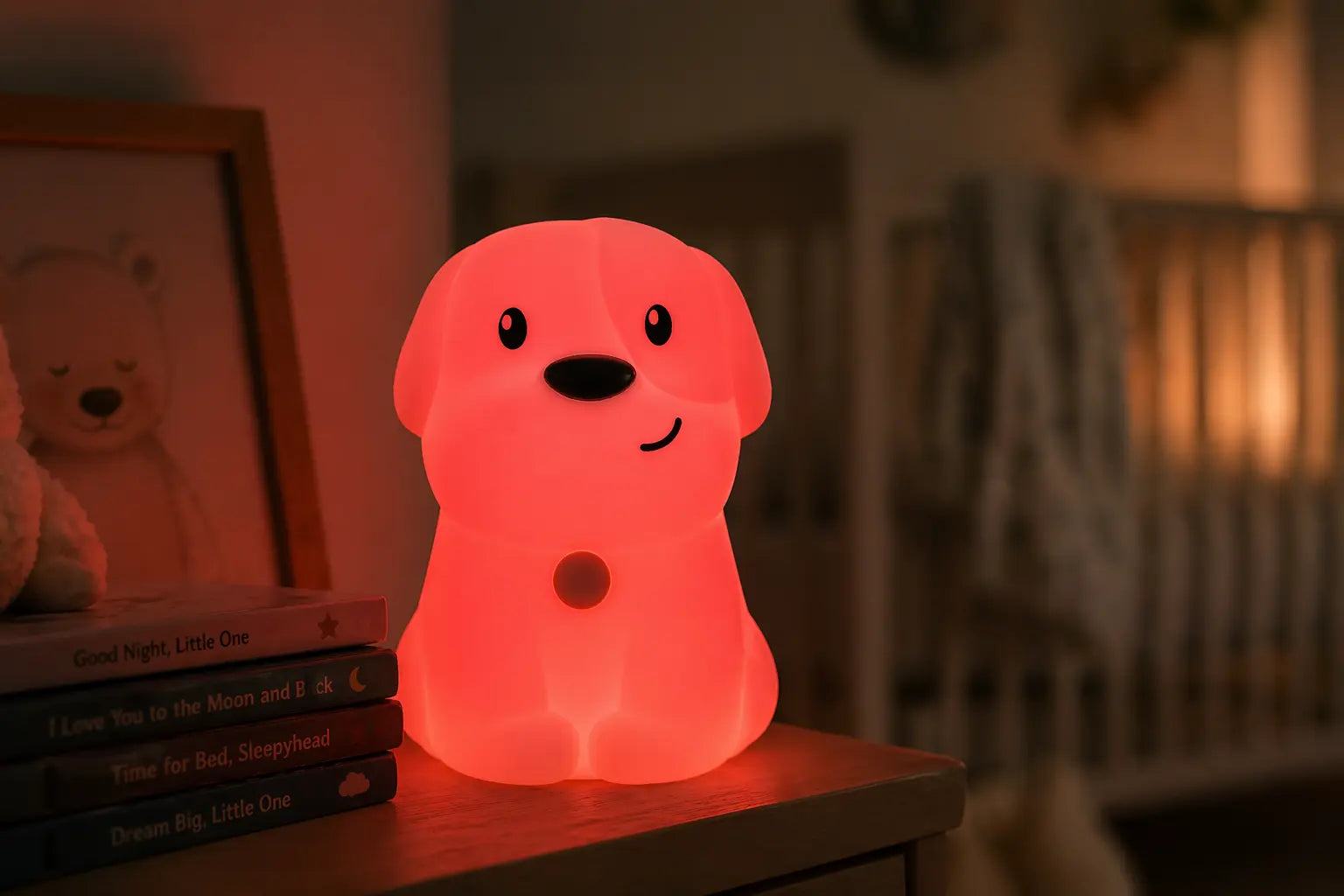
In the modern home, the sun never truly sets. Phones glow, televisions flicker, and bright LED bulbs light every ceiling. For parents of babies and toddlers, this creates one big problem: it stops the body producing melatonin, the hormone that signals it is time to sleep.
As families search for answers, one question keeps coming up in nurseries and sleep clinics alike: does red light help you sleep?
The short answer is yes. And the reason why is simpler than you might think. By understanding the benefits of red light at night, you can turn bedtime from a battle into a calm and easy wind-down for the whole family.
To understand why is red light good for sleep, we first need to look at how different light colours affect the brain.
Light enters the eye and hits specialised receptors that send signals to the brain. Blue and white light send a strong wake-up signal. They tell the brain it is midday and shut down melatonin production quickly.
Red light works in the opposite way. It sits at the longest end of the visible light spectrum. It does not trigger those wake-up receptors. The brain stays in sleep mode, melatonin keeps flowing, and the body prepares naturally for rest.
This is why so many parents and sleep experts now ask: is red light good for sleep? The science says yes, and it is backed by research into how light wavelengths interact with our body clock.
Here is why switching to red light after sunset makes a real difference:
• Protects melatonin:Unlike blue light, red wavelengths do not suppress the sleep hormone. The body can prepare for rest naturally.
• Reduces bedtime anxiety:A soft red glow gives toddlers a sense of safety without overstimulating the brain.
• Supports the body clock:Red light mimics the colours of a natural sunset, reinforcing a healthy sleep-wake cycle.
• Easier night checks:Parents can check on a sleeping child without flooding the room with wake-up light.
• Safe for newborns:Babies are more sensitive to light than adults. A red light environment protects their developing circadian rhythm from day one.
The benefits of sleeping with red light go beyond just falling asleep faster. Over time, a consistent red light routine supports deeper sleep, better hormonal balance, and healthier development in young children.
Parents often ask: do red lights help you sleep, or is it just a trend? The evidence points to yes, and here is why.
Studies on light and melatonin consistently show that short-wavelength blue and white light suppress melatonin significantly, even at low intensities. Red light, by contrast, has the least measurable impact on melatonin among all visible light colours.
Research on infants shows they are even more sensitive to light intensity than adults. A brief flash of white light during a midnight feed can reset a baby's internal clock, making resettling much harder. Using red light while sleeping keeps the brain in night mode throughout every feed and check.
For more on how light wavelengths affect infant brain development, read our guide: The Science of Red Light and Baby Sleep
This is one of the most common questions parents ask when setting up a nursery or toddler room. The answer comes down to wavelength and how each colour affects melatonin.
|
Light Colour |
Wavelength |
Melatonin Impact |
Best Use |
|
Red |
620-750nm |
None. Fully melatonin-safe |
Night feeds, sleep checks, all night |
|
Amber/Orange |
570-620nm |
Very low. Generally safe |
Evening wind-down, story time |
|
Warm White |
Mixed |
Moderate. Depends on intensity |
Daytime and early evening only |
|
Green |
495-570nm |
Moderate to high |
Avoid after sunset |
|
Blue/Cool White |
450-495nm |
High. Strongly suppresses melatonin |
Morning alertness only |
Red is the clear winner for the best red light for bedroom use. Amber is a reasonable backup for early evening. Blue and white should be off at least 60 minutes before bed.
Browse our full range of sleep-safe night lights in the Lumie World Night Light.
Timing matters as much as colour. Switching to red light before bed needs to start earlier than most parents realise.
|
Time Before Bed |
Action |
Why It Helps |
|
60 minutes |
Switch off bright overheads. Use red or amber light only. |
Starts melatonin production. The brain begins shifting into sleep mode. |
|
30-45 minutes |
Bath time, pyjamas, milk under red light. |
Routine cues combined with red light reinforce the sleep signal. |
|
15-20 minutes |
Story time with red light at its dimmest setting. |
Melatonin is now rising. Keep stimulation low. |
|
Lights out |
Place red night light across the room below eye level. Set a timer. |
Prevents glare. Timer fades light once deep sleep begins. |
Research shows that melatonin suppression from white and blue light can persist well after you switch the lights off. Starting red light before bed 60 minutes early gives the body time to recover and build healthy melatonin levels before sleep.
Many parents wonder: is it bad to sleep with red lights on, or is sleeping with red led lights bad for children?
The answer from paediatric sleep experts is no, as long as the light is kept very dim. Total darkness is the gold standard for deep sleep. But for children who fear the dark or need regular checks, a very dim red glow is safe and effective.
The key word is intensity. A red light that is too bright can still be stimulating. This is why choosing a lamp with adjustable dimming is so important. Set it to the lowest level that still provides comfort and safe visibility.
Is red light better at night than white light? Absolutely. White light contains blue wavelengths that actively suppress melatonin. Red light does not. For evening and overnight use, red wins every time.
This is a newer area of sleep research, and the findings matter for the whole family.
Yes, light at night can affect insulin sensitivity. Here is how it works in simple terms:
• Melatonin and insulin are linked.Melatonin plays a role in regulating insulin secretion from the pancreas. When light suppresses melatonin at night, it can interfere with this process.
• Research backs this up.A 2022 study found that even moderate light exposure during sleep was linked to higher insulin resistance the next morning in healthy adults.
• It affects parents too.Adults doing night feeds who expose themselves to white or blue light face the same metabolic risk. A dim red light protects everyone in the room.
A melatonin-safe sleep environment is not just good for sleep quality. It supports healthy hormonal and metabolic function for both children and adults.
It is worth clearing up a common mix-up before we continue.
Red light therapy for sleep uses high-intensity clinical lamps designed to boost cellular energy and reduce inflammation. Some studies suggest that regular red light therapy at night can improve sleep quality over time by regulating the body clock. This is a wellness treatment, not a bedside tool.
Red light therapy devices for sleep are separate products designed for this specific clinical use. If you are considering red light therapy for sleep benefits, speak to a health professional first.
Red sleep lighting is the everyday practice of using a low-intensity, red-hued light source in the bedroom overnight. Products like our Pepper Night Light are designed for this purpose. The goal is simple: provide enough light for safety without sending a wake-up signal to the brain.
For most families, red sleep lighting is the practical, effective, and affordable choice. It is the best red light for sleep in a home setting.
Newborns have no established circadian rhythm yet. Using a very dim red light during night feeds helps signal that night time is for sleep, not play. Keep the room as dark as possible between feeds.
By three months, most babies start developing a more regular sleep pattern. A consistent red light environment during every overnight interaction helps reinforce the night-day difference. Avoid white or blue light during this period entirely.
This is when fear of the dark typically begins. A soft red night light placed across the room gives toddlers comfort without overstimulating the brain.
Compare all our toddler night light options in our Comprehensive Guide to Best Toddler Night Lights blog.
Many older children still benefit from a low red glow overnight. At this age, letting the child control the light themselves using a remote builds independence and helps reduce bedtime anxiety.
When choosing a red light lamp for sleep, design matters as much as colour. A night light is not just a tool. For your child, it becomes a bedtime companion.
Pepper the Puppy is our most popular choice for families looking for the best red light for bedroom use. Here is what makes it stand out:
• Dedicated red light mode:Switched easily via remote. No need to get up during a sleep check.
• Safe silicone build:BPA-free, washable material that stays cool to the touch.
• Rechargeable and portable:No plug socket needed. Move it from nursery to hallway as your child grows.
• Adjustable dimming:Set it to the lowest brightness for true melatonin-safe comfort.
• Timer function:15, 30, or 60-minute timers let the light fade once your child reaches deep sleep.
Explore Pepper and all our characters in the Lumie World Night Lights
Between ages two and four, many children develop a strong fear of the dark. This is completely normal. But it can lead to stalling, repeated requests, and bedtime anxiety that drags on for an hour.
A night light for a toddler afraid of the dark is a widely recommended approach, as long as it sits in the warm colour family: red, amber, or orange.
One effective technique is to let your child set their own light with a remote. That small sense of control is powerful. Combined with the biological benefits of red light while sleeping, it creates a calm and consistent bedtime environment.
1. Dim the house:One hour before bed, turn off all bright overhead lights. Switch to red light for the room to create a sunset atmosphere.
2. Wind down together:Read stories under the Pepper night light set to red. The brain begins preparing for sleep.
3. Low and away:Place the red light across the room below eye level. Set the timer. Let it fade once your child reaches deep sleep.
Red is the best LED light colour for sleeping. It has the longest wavelength of all visible light and has almost no impact on melatonin production. Amber and orange are good second choices for early evening use. Avoid blue and cool white LED light after sunset entirely.
Start using red light at least 60 minutes before bed. This gives the body enough time to begin producing melatonin naturally. Switching to red light only at lights out is too late. The melatonin window has already been disrupted by earlier white light exposure.
The 3-3-3 rule for sleep is a simple bedtime framework: stop eating heavy meals 3 hours before bed, complete the final steps of the bedtime routine 3 minutes before lights out, and finish with 3 calming thoughts or reflections. It works well alongside a red light routine to create a consistent sleep signal for children.
Yes. Research shows that light at night, especially blue and white light, suppresses melatonin which is linked to how the body regulates insulin. A 2022 study found moderate light during sleep was associated with higher insulin resistance the next morning. Using a dim red light protects both sleep quality and metabolic health.
Red light does not make you sleepy directly. Instead, it allows your body to become sleepy naturally by not blocking melatonin production. It removes the wake-up signal rather than adding a sleep signal. The result is a smoother, faster transition into sleep.
Yes, provided it is very dim. Many parents use a built-in timer so the light fades once the child reaches deep sleep. Most Lumie World lights offer 15, 30, and 60-minute timer options through the remote control.
Yes. Red LED lights are specifically effective because they can be engineered to emit only long-wavelength light with minimal output at other wavelengths. Standard incandescent or white LED bulbs leak blue light even when dimmed. A dedicated red LED light for sleep gives you a cleaner, more reliable melatonin-safe environment.
Babies are more sensitive to light than adults. Even brief exposure to white or blue light during a night feed can reset their internal clock and make resettling very difficult. Why red light at night makes such a difference is simple: it keeps the brain in sleep mode so feeds and nappy changes cause the least possible disruption to the sleep cycle.
Choosing the best red light for sleep is a small change with a lasting impact. By working with your child's natural biology instead of against it, you create a sleep environment that supports growth, brain development, and a full night of rest for everyone in the home.
Whether you are setting up a nursery for the first time or helping a toddler through fear of the dark, the principle is the same: red light first, routine always.
Ready to find the right light for your family? Start with the Lumie World Night Light or read our Comprehensive Guide to Best Toddler Night Lights blog to compare all our characters.


